A concept book gets read by people who weren’t in the design meetings. That means the owner who pays, the operator who will run the hotel and, if it’s a branded hotel, the brand that has to sign it off. Each part of the book answers a question one of them will have. Below is the order we use, with pages from the book we made for Ca’n Brava, an invented finca hotel.
The order
- The cover. The name, one line on the place and the kind of book, and one picture or three.
- The project in pictures. The rooms the guest will see first, with one line on the project.
- Contents. People read a short book in order but jump around a long one, so the contents page lets the operator go straight to the rooms.
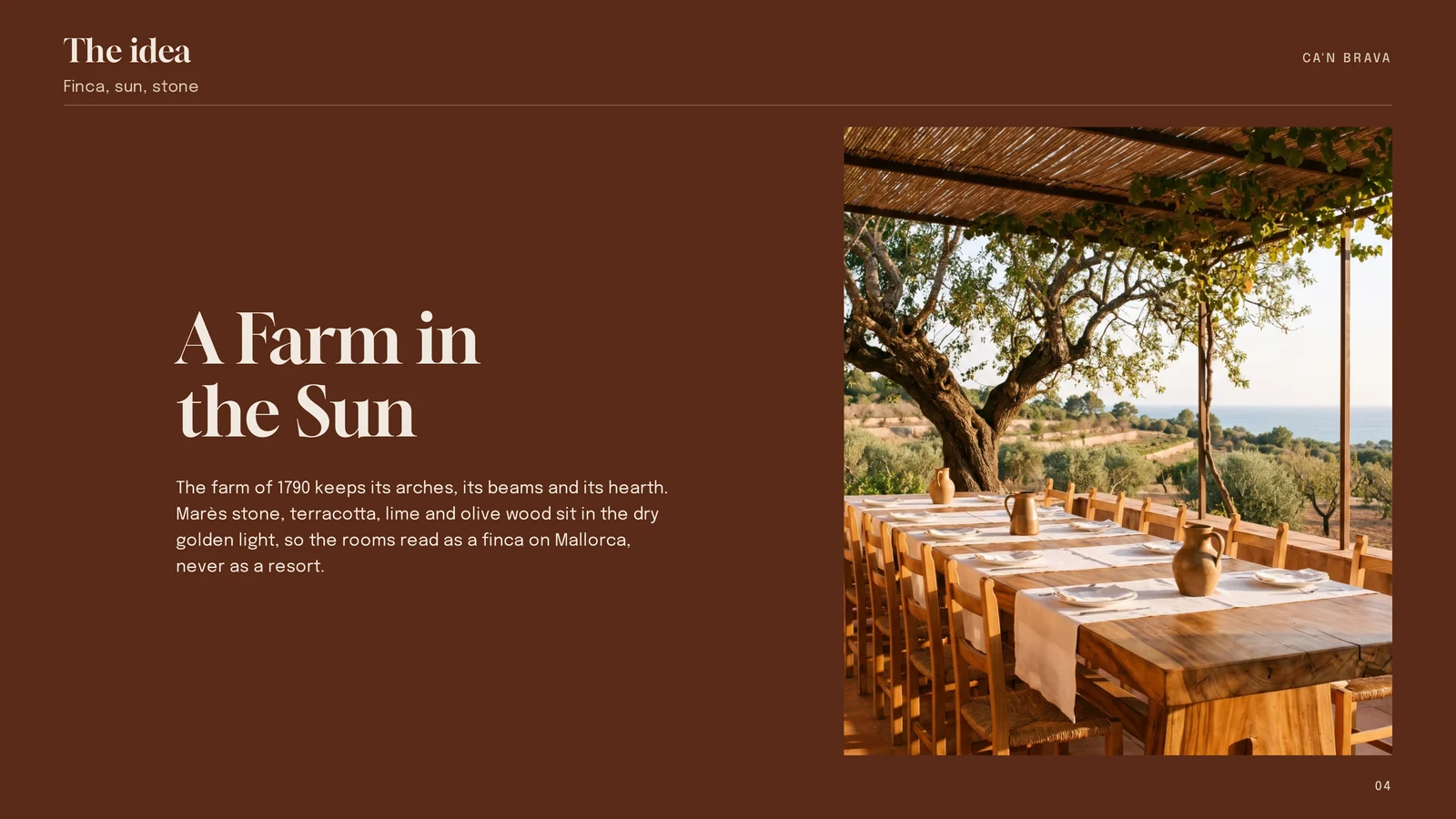
- The idea. One sentence and one paragraph on what the hotel is, in the words you’ll be using for the next year. Everything after it should follow from it.
- Materials. The few materials the idea is made of, floor by floor, each with its name and finish. This is the page a contractor and a maker read most closely.
- The palette. Five or six colours, each with a name and tied to a real finish in the project rather than a mood.
- The guest. Who stays, for how long and what their day looks like. This is where an operator checks the design against the business.
- The place and the market. Where the hotel is and who it’s for. Keep it short and give sources.
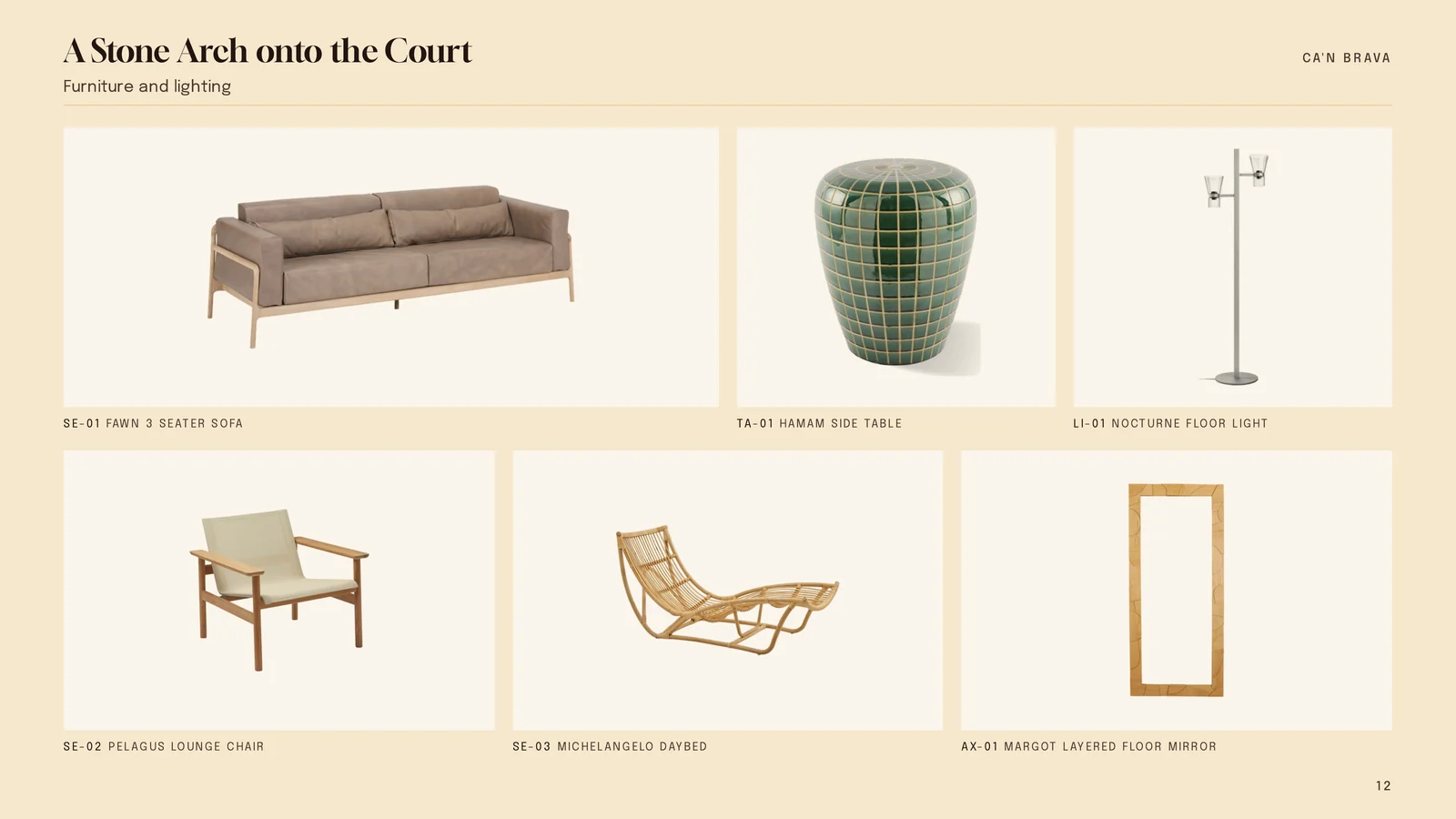
- The spaces. Each space gets a board of its furniture and lighting and a page of its materials, plus a view of the room where there is one. This is the heart of the book and its longest part.
- The rooms. The guest room types side by side with their areas, then each room’s furniture and materials.
- Sources. Where each fact and picture came from.
What makes a book you can build from
A beautiful book can still be impossible to price. Four things decide whether you can build from it.
- Real products. Every piece on a board is a real product from a real maker. It’s priced from the maker’s own page when the page gives a price and marked to quote when it doesn’t, so the budget can start from the book.
- One line per piece. Each piece on a board links to its line in the FF&E schedule, with its quantity, the rooms it goes in, its price and its spec sheet. That keeps the book and the schedule one set instead of two documents drifting apart (how the files stay in step).
- Assumptions are marked. A quantity or lead time nobody has confirmed is marked “(assumed)”. If the workflow proposes a piece for a line the concept left open, that piece is marked for the designer to confirm or swap.
- Sources at the back. The owner’s advisers will ask where a fact came from. The last page answers before they ask.
How Nodejam makes one
In Nodejam, code decides the pages and the brief decides the words. Code lays out every page from fixed patterns and finds the pictures, starting with the firm’s own files, then real products from makers’ shops, then photographs. It also checks every page, so no text is smaller than 11 px and every line can be read against its background. The words are written from the brief, in the studio’s own voice. If a space doesn’t have enough products or a room picture, it’s left out and the reply says so. The book comes back as a PDF, next to the FF&E schedule, the budget and the requests for quotation made with it.
Ca’n Brava is invented, and its room pictures were made with AI for this example. A real project’s book uses the studio’s own photographs and the makers’ product pictures.