Who it is for
Interior design and architecture studios, hotel groups’ design and procurement teams, owners and developers running a fit-out, and the purchasing firms beside them. It is made for hotels, villas, restaurants, wellness and offices, where one project means dozens of rooms, hundreds of items and a client who changes something late.
What goes in
- The brief, as it came: a PDF, an email thread or meeting notes.
- The room list or area schedule, and the drawings you have.
- Your past projects and templates, so the files come back in your layout.
- Makers’ product sheets and price lists, where you already have them.
The first time, Nodejam reads your past work and asks at most three questions. After that you point it at the project folder.
What comes back
| File | What is in it |
|---|---|
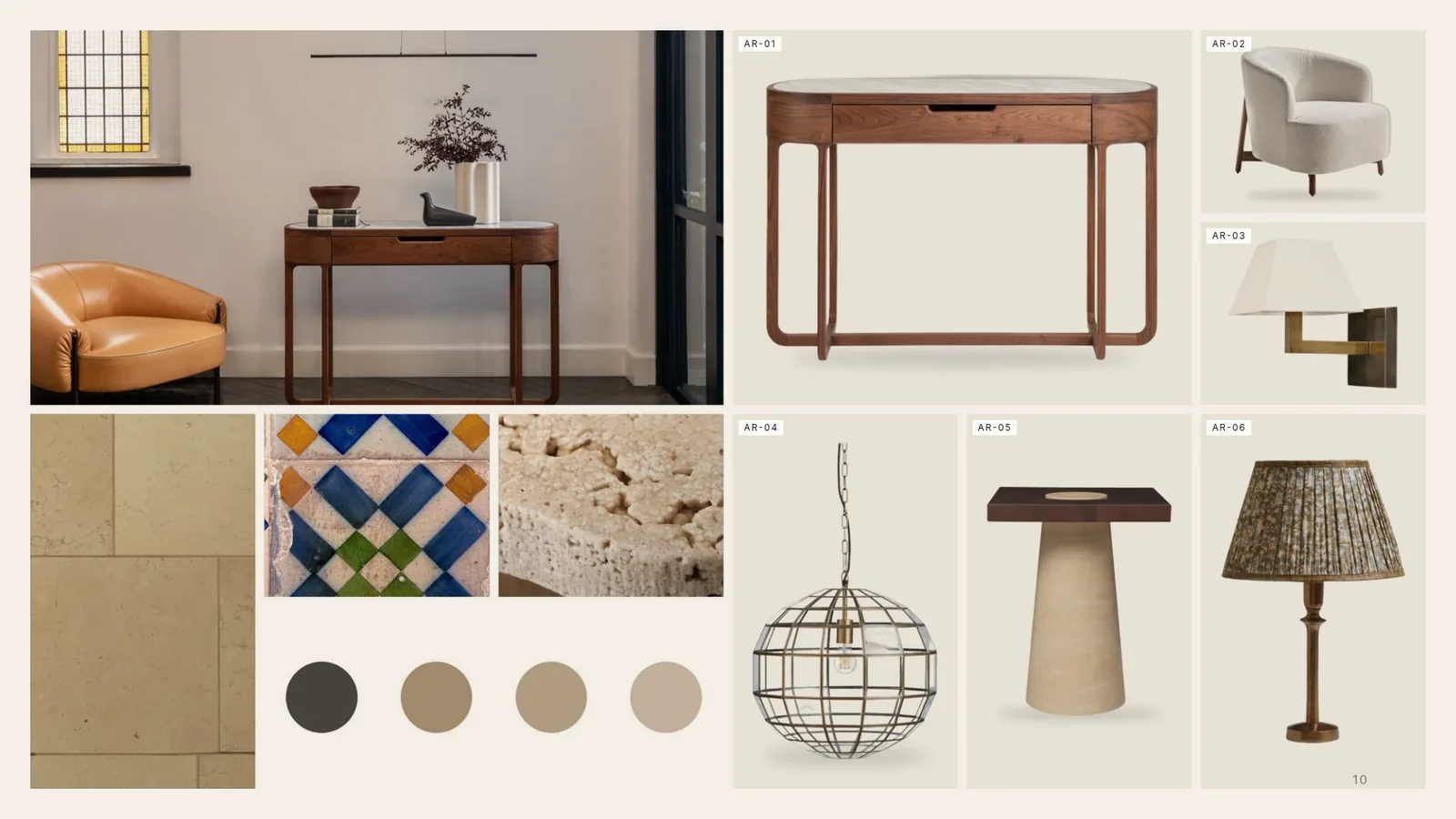
| Concept book | The story, then room by room: the products chosen, materials and finishes, pictures placed and the pages checked |
| FF&E schedule | One row per item: room, reference, maker, product, finish, dimensions, quantity, unit, price, lead time and status |
| Budget | The schedule priced by room and package, with what is quoted, what is estimated and what is still open |
| Programme | Design, approvals, ordering, lead times and installation as dates |
| Requests for quotation | One per maker, each listing that maker’s items, quantities and finishes |
The files are made from each other, so a quantity in the schedule is the same quantity in the budget and in the maker’s request. Every row that needs a person (a price nobody has quoted, a finish to confirm with the client) is marked for your team to confirm.
When something changes late
A client asks for one more option, a maker drops a product, the room count moves. You change the source and run the workflow again. The schedule, the budget and the requests follow the change, so the same edit is not retyped in five files.
What your team still does
The design is yours. The team reviews the marked rows, confirms prices with makers, checks the deck reads the way the studio speaks, and sends. Nothing goes to a client or a maker without a person’s yes.
How it fits with the tools you have
If your studio keeps its product library and orders in a specification tool, keep it. Nodejam makes the files around it from what you already have. See Nodejam alongside your FF&E tool.
See the files
- Concept decks made in Nodejam, with every page of a finished deck
- A free FF&E schedule template, the columns this workflow fills
- How hotel FF&E budgets are set per key